
ULTIMA / RESULTS AND SCIENCE
A natural appearance.
Documented changes.
A refined aesthetic result is underpinned by a considered treatment concept. ULTIMA’s approach is placed in professional context through its own performance evaluations, photographic and instrumental observations, and published research on electrical muscle activation and light applications.
IN-HOUSE PERFORMANCE EVALUATION
Change you can
see and experience.
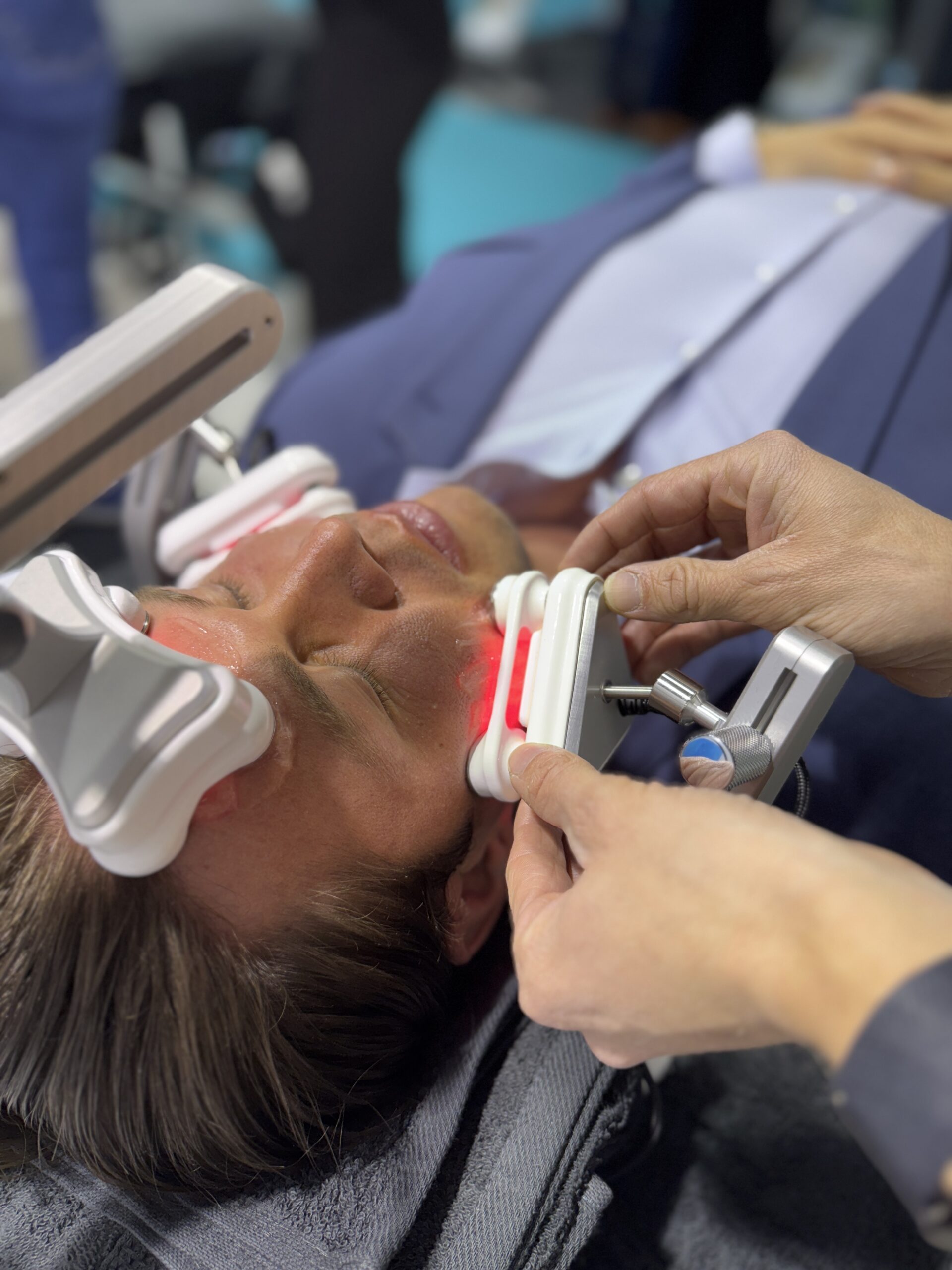
The evaluation involved 25 adults, with an age-based schedule of 5 or 7 treatments. The documentation assessed photographic changes and participants’ own experiences separately.
88%
Visible changes in photographs
According to the source’s overall assessment, clear changes were recorded in 68% of participants, with milder but perceptible changes in a further 20%.
≈80%
Satisfaction at the end of the course
Approximately 80% of participants considered the results of the full course visible and satisfactory.
≈70%
Early improvements in how the skin feels
Around 70% of participants reported that their skin felt fresher and slightly firmer within 24–48 hours.
In-house performance evaluation without a control group · 25 adults · 5 or 7 treatments · rounded proportions reported in the document. The figures describe different endpoints; they are not additive and do not constitute a promise of individual results.
What does this evaluation show?
The study documents aesthetic changes and client experiences observed during professional application. Trained professionals delivered the treatments, with standardised photographic follow-up. The protocol described two 25-minute sessions per week, separated by at least 72 hours.
Without a control group, the individual contributions of the combined treatment components cannot be quantified. Regular follow-up is needed to assess longer-term persistence.
Source: ULTIMA FACE Clinical Performance Evaluation, document dated 7 March 2026, pages 4–9. Selected findings.
MULTIPLE PERSPECTIVES / A CLEARER PICTURE
It is worth looking
beyond appearances.
01 / PHOTOGRAPHY
Documenting the overall appearance
Before-and-after photographs taken from consistent viewpoints help compare facial contours, surface details and overall appearance.
02 / 3D SURFACE
Tracking shape in three dimensions
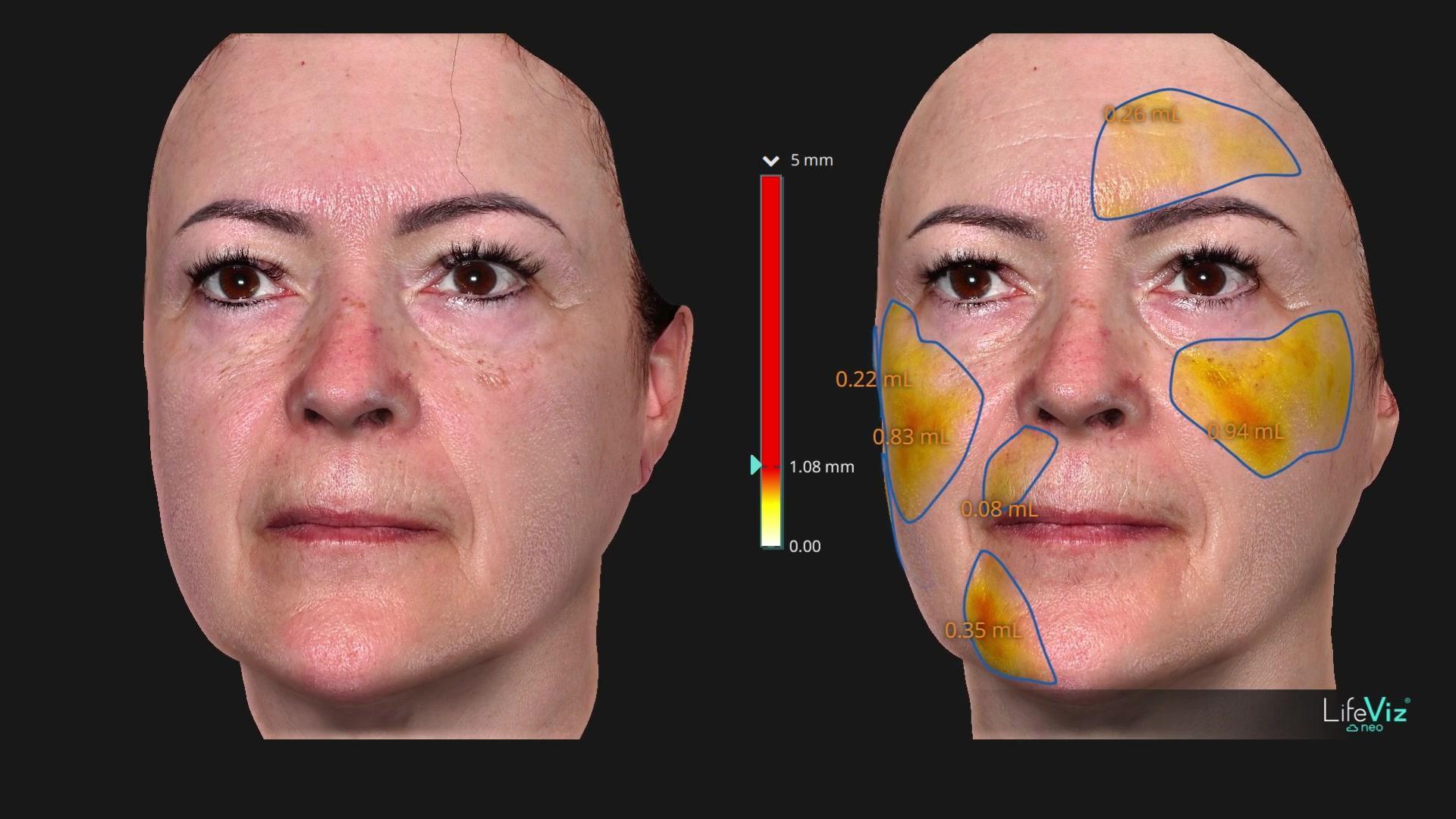
LifeViz images allow changes in the facial surface to be examined. Colour maps illustrate the location and direction of geometric differences.
03 / ULTRASOUND
Insight into skin structure
Dermus measurements document the skin’s layered appearance and thickness in selected areas. Reproducible measurement locations are particularly important for comparison.
LIFEVIZ / THREE-DIMENSIONAL DOCUMENTATION
Subtle contour changes.
Traceable in three dimensions.
The selected F–03 case shows coordinated bilateral surface changes in the cheek areas. The 3D image provides additional spatial information alongside the photographic impression.
A sound comparison requires consistent facial expression, head position and imaging settings. A 3D surface difference alone is not a direct measurement of new tissue or muscle mass.
In-house LifeViz case analysis · selected F–03 panel · documentation following five treatments.
DERMUS / ULTRASOUND OBSERVATION
Measurement points.
Real tissue information.
In one selected forehead measurement from the exploratory ultrasound evaluation, the indicated skin thickness changed from 1.37 mm to 1.66 mm between the pre- and post-treatment images.
+21.2%
Local thickness change
The result at one selected measurement point, comparing images taken immediately before and after treatment.
This observation contributes to the documentation of an early tissue response. Hydration and fluid distribution may also influence the ultrasound image; an immediate thickness change alone cannot establish lasting collagen formation.
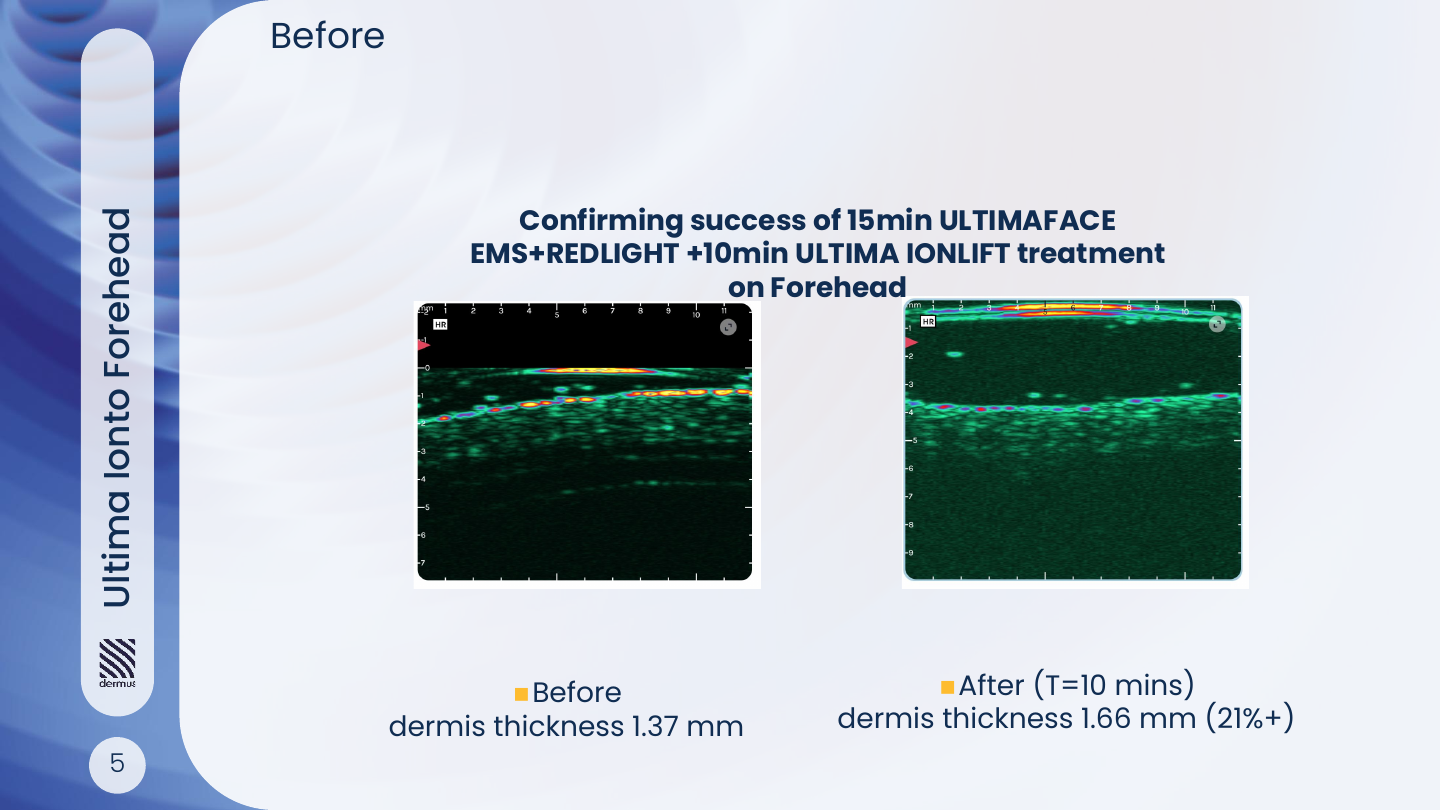
In-house exploratory Dermus documentation · selected measurement excerpt. The result is not a group mean and cannot be generalised to all treated areas.
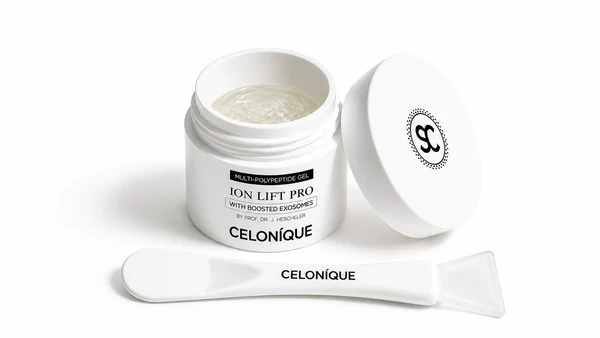
CELONIQUE / DEVELOPMENT COLLABORATION
Formulation and technology.
A shared development direction.
ULTIMA and CELONIQUE’s close development collaboration focuses on coordinating a professional cosmetic product with electrical application. The partner’s exploratory 2026 report presents findings on the combination of CELONIQUE gel and electrically assisted application.
In a selected analysis from an initial sample of 45 participants, parameters relating to skin surface irregularity and pores changed in a favourable direction.
−34%
Skin surface irregularity
The change reported in the selected analysis; p = 0.004.
−21%
Pore parameter
The change reported in the selected analysis; p = 0.018.
Exploratory partner findings using responder selection and outlier exclusion. The report does not state the size of the analysed subgroup; the data are not estimates of ULTIMA’s independent effect.
Interpreting the partner findings
The report describes enrolling 45 participants and follow-up at several time points. The analysis selected responders showing at least 15% improvement in a minimum of two parameters and also applied outlier exclusion. The reported percentages therefore cannot be regarded as the average results of the entire initial group.
The combination studied was electrically assisted application of CELONIQUE gel. The description does not provide a basis for attributing the changes solely to the ULTIMA device, a single ingredient in the gel or a particular penetration depth.
Source: Clinical Evaluation of the Efficacy of Celonique, 2026, selected methodological details and findings. Partner research report.
PUBLISHED SCIENTIFIC LITERATURE
Research behind
the treatment approach.
Facial muscle conditioning, the biological effects of light and imaging documentation are distinct areas of research. External publications help explain the ULTIMA approach; the device, dose and treatment schedule used in each study determine what its findings apply to.
FACIAL MUSCLE CONDITIONING
The relationship between muscle and contour
Controlled studies have documented changes in muscle thickness and appearance alongside repeated electrical activation. Facial muscle research →
LIGHT APPLICATION
Why parameters matter
Published light-treatment studies report favourable changes in the skin surface. Alongside wavelength, energy dose and the method of application are critical. Light-treatment research →
MUSCLE CONDITIONING
Consistency and adaptation
Research on electrical muscle training also examines the development of strength and endurance. The value of targeted conditioning lies in consistent application. Body-treatment background →
VALUE FROM EVERY PERSPECTIVE
Clear for the client.
Useful for professional decisions.
FOR THE CLIENT
A natural goal, a personal plan
The consultation starts with the baseline condition and desired appearance. A treatment course and follow-up help assess gradual change realistically.
FOR THE CLINIC
A treatment process that can be documented
Consistent photography, personalised settings and agreed follow-up dates provide a shared framework for professional practice.
FOR THE PROFESSIONAL PARTNER
A clear foundation for development
Presenting in-house observations alongside published research clarifies the platform’s professional direction, the endpoints examined and opportunities for further research.
What makes a result comparable?
Consistent lighting, camera angle, facial expression and imaging distance; a recorded treatment count and follow-up time point; and, for instrumental examinations, the same measurement area and settings. Early change and later maintenance are separate follow-up questions.
How does consistency fit with natural processes?
Repeated muscle activation provides a conditioning stimulus. The treatment plan should be built around the baseline condition, objectives and individual response, then reviewed through documented follow-up. The treating professional personalises the frequency of maintenance sessions.
Authorised treatment functions may vary by country.
EXPLORE THE WORLD OF ULTIMA