
ULTIMA / SHAPE
Personalised body treatment.
Designed around you.
Muscle stimulation, light and controlled heating. Complementary options within a personalised treatment plan.
ULTIMA Shape combines muscle conditioning with light- and heat-treatment options that support the skin’s appearance. The aim is a more toned overall appearance, support for natural processes and consistent, long-term care.
NEEDLE-FREE · CONTROLLED MUSCLE ACTIVITY · PROFESSIONAL SUPERVISION
PERSONALISED BODY TREATMENT
Focused on the muscles.
Adapted to you.
Applicators placed on the skin deliver controlled electrical impulses. These may trigger muscle contractions through the nerve fibres that control muscle activity. The treatment programme alternates active phases with rest periods.
ADWT and IST+ provide muscle stimulation, while 660, 730 and 940 nm light sources offer combined light and heat treatment. The practitioner adapts the treatment plan to your device configuration, goals and individual sensitivity. Read more about the role of light and heat below.
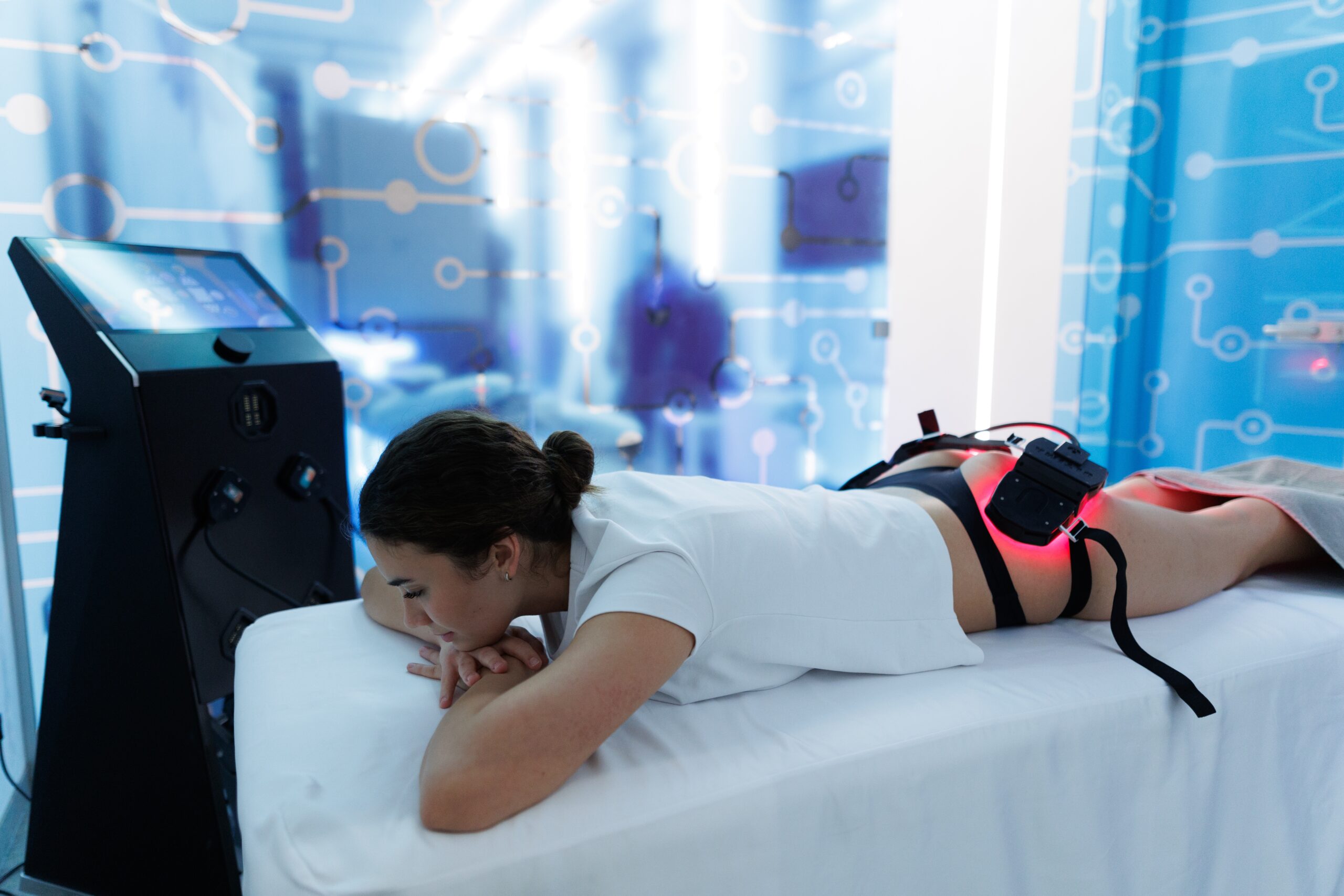
The footage shows applicators secured over the gluteal muscles. The photographs and videos illustrate the treatment setting.
NEUROMUSCULAR STIMULATION / ADWT AND IST+
Varying impulses.
Targeted muscle activity.
ADWT – Advanced Dynamic Waveform Therapy – is a stimulation approach based on varying waveforms. Depending on the programme, low- and medium-frequency impulse components delivered through the applicators stimulate the nerve fibres controlling the targeted muscles. Rhythmic contractions and rest phases are designed to condition the muscles and support their progressive development.
The effect depends on the combined influence of applicator placement, skin contact, pulse timing and intensity. The aim is meaningful, well-tolerated loading of the relevant muscle group. Anatomy and device settings also affect how effectively deeper muscle fibres can be stimulated; a higher current alone does not mean a better treatment.
IST+ is a further development of the patented IST technology. By varying impulse patterns and stimulation within the contraction phase, it aims to reduce habituation to repetitive stimulation. This allows stimulation to remain varied and responsive to the individual over a longer treatment course.
Regular muscle activity builds on the body’s natural adaptation. Successive treatments are therefore refined in light of experience, with appropriate rest periods and follow-up. Progress varies between individuals; not every session produces a greater change than the previous one.
01 / STIMULATION
Controlled impulse
Appropriate contact between the applicator and the skin helps transmit the electrical stimulus. The professional sets the intensity.
02 / MUSCLE ACTIVITY
Rhythmic contraction
The muscle may contract during the active phase. The programme and individual sensitivity both influence the intensity of the sensation.
03 / REST
Time to relax
The muscle relaxes during the rest phase. The balance between active and resting periods is an important part of the workload.
Authorised treatment functions may vary by country.
COMBINED LIGHT AND HEAT TREATMENT
Three wavelengths.
Coordinated care.
The 660, 730 and 940 nm light sources offer an option that complements muscle stimulation. Alongside supporting the skin’s appearance and elasticity, treatment also focuses on local microcirculation and natural cellular function.
When absorbed in tissue, red and near-infrared light may initiate biological responses. Photobiomodulation may influence cellular signalling and energy metabolism; this differs from the effects of heating. The extent of changes related to skin elasticity and renewal also depends on dose, treatment schedule and individual response.
Near-infrared light can also reach tissues below the surface. Actual penetration depends on wavelength, skin characteristics and the method of application. Controlled local heating may temporarily increase microcirculation and help muscles relax.
Supporting local metabolic processes is a treatment objective associated with cellular energy metabolism and tissue blood supply. It does not mean a guaranteed increase in whole-body metabolism or fat burning. The professional considers the light dose, duration and perceived warmth.
660 nm
Red light
The visible red range forms part of the skin-focused light-treatment concept. The aim is to support the skin’s natural renewal processes.
730 nm
Far-red and near-infrared
This wavelength, at the boundary of the two ranges, complements a treatment using multiple wavelengths. Its effect is considered as part of the total light dose.
940 nm
Near-infrared
The near-infrared component may also interact with subsurface tissues. Output power and application time together determine the local thermal effect.
Authorised treatment functions may vary by country.
TREATMENT AREAS
The right placement.
The right purpose.
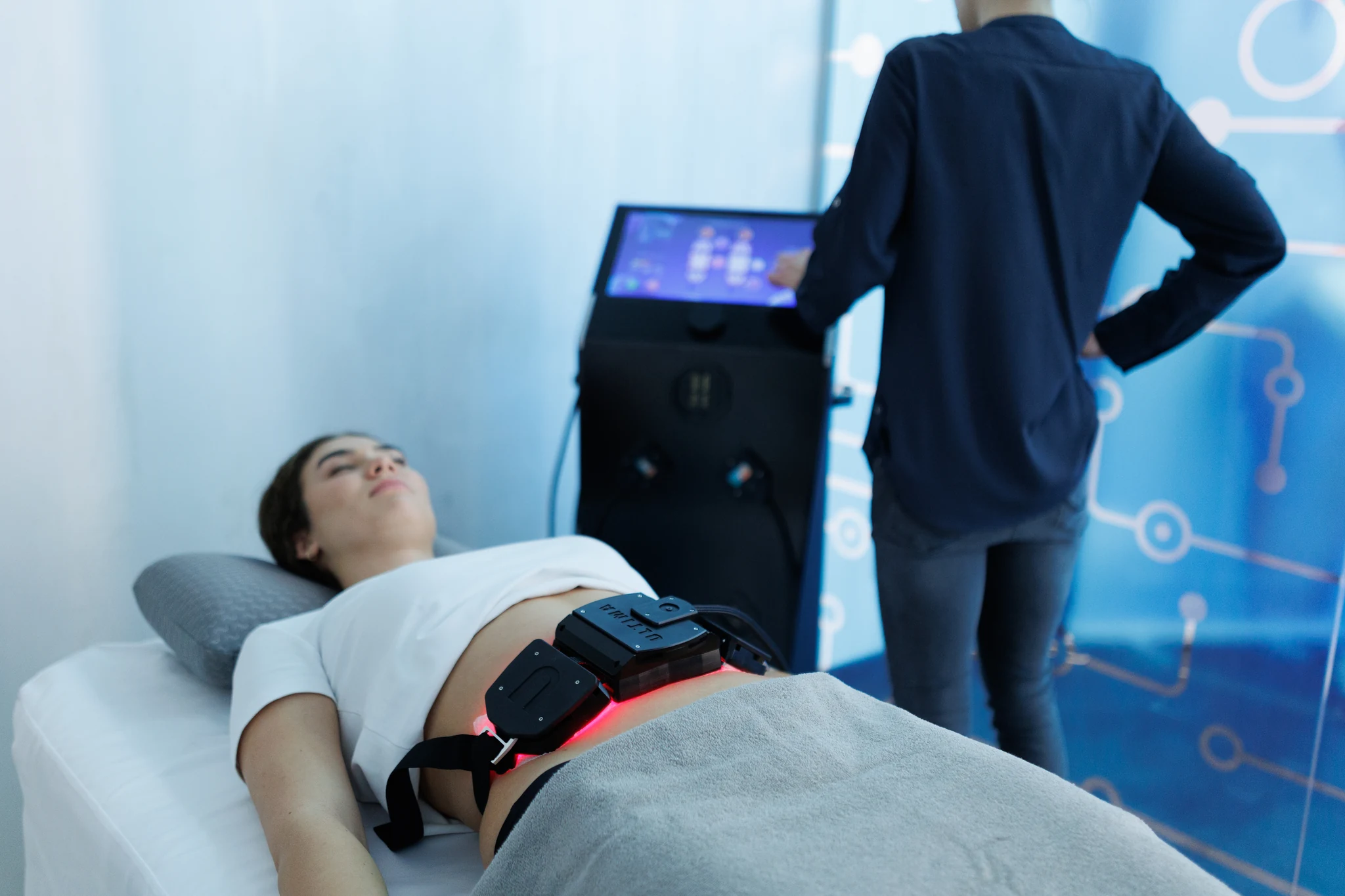
Different body areas involve different muscles and require different applicator positions. Within the treatment plan, the professional selects an applicator and programme suitable for the area.
01
Abdomen and the postpartum abdominal wall
Targeted abdominal muscle stimulation may form part of a plan to strengthen the abdominal wall. After childbirth, supplementary muscle work may be considered once healing has taken place and following assessment by a doctor or physiotherapist. With diastasis recti, a hernia, pain or a caesarean-section scar, individual tolerance to loading must first be established.
02
Thighs and gluteal muscles
Targeted applicator positioning supports conditioning of the thigh and gluteal muscles. The programme is adapted to the muscle group, desired tone and individual tolerance to loading.
03
Inner thighs and upper arms
The smaller IR applicators allow a targeted approach to smaller or harder-to-access areas. Stimulation of appropriate muscle groups in the inner thigh and upper arm may also form part of a personalised plan, within the intended application area of the applicator.
Both muscle tone and skin condition can contribute to a less firm appearance of the upper arms. Muscle stimulation and light treatment target different processes; the appropriate combination is determined through individual assessment.
Authorised treatment functions may vary by country.
TECHNOLOGY AND CONTROL
Clear settings.
Carefully structured treatment.
The ULTIMA system brings programme selection, timing and intensity adjustment together in one interface. The professional starts with a programme suited to the treatment objective, then gradually sets a well-tolerated intensity.
Positioning the body applicators, preparing the contact surfaces and securing them evenly are important parts of the process. Stable contact supports consistent stimulation; the professional checks the fit and your comfort throughout treatment.
Electrical stimulation, light at multiple wavelengths and local heating have complementary roles in the treatment plan. Separate parameters determine their delivery; the professional selects the combination and sequence of treatment steps.
THE TREATMENT PROCESS
Step by step.
Focused on you throughout.
01
Consultation and goal setting
You discuss the areas you would like to improve, previous treatments and any health-related circumstances affecting suitability. Together, you set realistic goals.
02
Preparation and positioning
The professional checks the skin, prepares the contact surfaces and secures the applicators in the appropriate positions. A comfortable, supported body position is also established.
03
Gradual adjustment and treatment
Intensity is adapted to your feedback. The practitioner monitors the muscle response and comfort, adjusting the settings or stopping treatment if necessary.
04
Review and the next appointment
You discuss your experience, the timing of the next session and follow-up. Recording the starting condition helps assess subsequent changes.
COMFORT AND TREATMENT SENSATIONS
Muscle activity you can feel.
Attention to comfort.
The aim is pain-free, well-tolerated treatment. You may feel mild tingling, rhythmic muscle tension and, depending on the selected application, warmth. Sensations vary between individuals, so the appropriate intensity is established gradually.
Treatment uses surface applicators without needles or incisions. A relaxed position and ongoing feedback help maintain comfort. Report discomfort or pain immediately: the practitioner will adjust the settings or stop the application.
After treatment, you may experience temporary muscle fatigue, sensations similar to those after exercise, or skin redness. Your experience and recovery are considered when scheduling the next session.
EXPECTED RESULTS
Realistic goals.
Changes you can follow.
Combined treatment aims to condition the muscles, promote a more toned appearance and support skin elasticity. ADWT and IST+ target muscle activity, while light and heat treatment target local tissue processes. Expected changes depend on the starting condition, selected programme and consistency of treatment.
01 / SHORT TERM
The sensation of muscle work
After a session, you may feel that the treated muscle has worked. This alone does not yet mean lasting muscle strengthening or a demonstrated change in body shape.
02 / TREATMENT COURSE
Progress at an individual pace
The aim of a treatment course is to support tone and muscle function. The extent and timing of visible change vary between individuals; a predetermined loss in centimetres or kilograms cannot be promised.
03 / MAINTENANCE
Long-term care
Supporting natural processes takes consistency and time. Successive treatments, maintenance sessions and appropriate recovery may help preserve favourable changes. Physical activity, balanced nutrition and rest complement the plan.
Changes are best followed using photographs taken under consistent lighting and in the same body position, personal feedback and, where needed, consistent measurements. Many factors other than treatment affect body weight and circumference.
Electrical muscle stimulation does not replace regular exercise and, on its own, is not a weight-loss programme or a guaranteed fat-reduction procedure. The treatment plan targets healthy muscles; symptoms or medical conditions require prior consultation with a doctor.
FREQUENTLY ASKED QUESTIONS
What to know
before you begin.
How long does a session take?
The Shape programmes include treatments lasting 25 minutes. The full appointment also includes consultation, preparation and review. Your treatment provider will confirm the exact duration based on the selected programme.
How many treatments are needed?
The length of the treatment course and intervals between sessions are planned around the starting condition, goals and individual response. There is no universal number of sessions; the plan may be adjusted during follow-up.
Who might ULTIMA Shape be suitable for?
It may be considered by those wishing to incorporate targeted muscle stimulation and skin-focused care into a personalised treatment plan. Suitability is always assessed beforehand. Tell the provider about any implanted electronic device, pregnancy, existing medical condition or recent childbirth before the consultation.
Can I exercise alongside treatment?
Treatment can complement physical activity, but discuss exercise on the same day and the timing of repeat sessions with your practitioner. The load on the relevant muscle, any muscle fatigue and the required rest period all matter.
Why is follow-up important?
Follow-up helps distinguish temporary treatment sensations from changes that can be observed over a longer period. Based on your experience, the professional may recommend further or maintenance sessions.
ULTIMA / THE NEXT STEP
Your goals.
A considered treatment plan.
Personalised body treatment begins with a conversation. Explore the treatment process and discuss with your chosen professional which application suits your goals.